15 April 2010


14 April 2010
Post to Maskil_Activity 04/14/2010
Israel Freight Transport Report Q2 2010 Market Report
- In late February 2010, news emerged that Israel’s cabinet was to hold a meeting to decide the fate of the country’s Transport Plan, which was reportedly going to be allocated only half of the originally planned budget. Israel’s daily newspaper Globes cited unnamed senior officials involved with the plan, who said that the budget allocated for projects in railways and roads was cut to ILS25bn (US$6.6bn) to ILS 27bn (US$7.2bn). This is reportedly half of the budget requested by advocates of the transport plan, led by Ori Yogev, the economic adviser to Prime Minister Benjamin Netanyahu. Globes reported that the finance minister, Yuval Steinitz, had objected to the original budget and so the revised budget is the result of a compromise between the two sides. According to the allocation proposed, the budget will primarily be allocated to projects that are ready for construction, while future projects will be planned, but financed at a later time. Projects due to be financed by the state are: the Jezreel Valley railway between Hadera and Beit She’an; the Acre-Carmiel railways; and the extension of the Cross Israel Highway. According to a report by newspaper Haaretz, out of the eight railway plans (proposed by the office of the prime minister), four have been postponed under the final plan. This is a blow to Israel Railways’ development plan, which had envisioned every town with more than 50,000 residents to be connected to the railway network.
Mass Starvation and Displacement in Syria
Bechor noted that Syria's predicament throws into sharp relief the reasons for its desire to exert sovereignty over the Golan Heights.
He noted that Syria previous transferred "one million Syrian citizens to Lebanon in order to take over its economy" in establishing its occupation of that country, and theorized that Syria wants control over Israel's north-eastern territory in order to use it as a springboard to take control over the water resources of Israel's lake of Galilee (Kinneret).
"Bashar Assad dreams of filling the Golan with one million Syrians," wrote Bechor, "and then northern Israel will be in his hands; when he wishes to do so, he will prompt 'resistance' and then roll his eyes to the heavens and declare that he doesn't know who did it."
According to Yoram Ettinger, a former Israeli career diplomat and a consultant on US-Israel relations, "Syrian control of the Golan watershed — located on the present cease fire line along the eastern Golan Heights mountain ridge — would pollute the Kinneret waters and make it easy to divert its water sources," and would cost Israel control over 30% of its current water resources.
Earlier this year, Israeli foreign minister Avigdor Lieberman warned Assad that any aggression against Israel would lead to the toppling of his regime.
Posted from Diigo. The rest of my favorite links are here.
13 April 2010
Post to Maskil_Activity 04/13/2010
Israel and Thailand: Collapsibility (Science Leadership Academy)
Society’s Response to its Environmental Problems: 4
There have been efforts in Israel to mitigate the deforestation and extinction of native species resulting from industry. Conservation efforts have been partially successful.
Israel has also made efforts to prevent its water supply from vanishing through better resource management practices.
The Negev Desert had been undergoing desertification for over 2,000 years prior Israel’s agricultural and irrigational development of the region, which has resulted in a reversal of the process.
Overall, Israel appearing to be growing environmentally conscious. In response to signs of environmental problems, it takes moderate action to prevent the problem from worsening or to solve it. Still, Israel’s industrial practices are destructive to its environment, and, as with most industrialized nations, it is difficult to compel industry to behave in a more environmentally conscious manner.
Posted from Diigo. The rest of my favorite links are here.
10 April 2010
Post to Maskil_Activity 04/10/2010
Above it all (Haaretz - Israel News)
Fed by self-styled experts, public ignorance, manipulative marketing and naked greed, the fashion of high-rise, luxury apartment buildings is rapidly transforming the character of many cities across the country. Part of a nationwide trend of anti-urban, antisocial building projects of every type, these towers accurately reflect today's Israel, which is concerned less with a good society and more with the good life - or at least with what many consider the good life to be. If architecture can be said to be a faithful reflection of the society it serves, then clearly class and age distinctions are on the increase now, rather than being broken down.
Posted from Diigo. The rest of my favorite links are here.
09 April 2010
01 April 2010
Post to Maskil_Activity 04/01/2010
Kashrut demands get stricter every year (Haaretz - Israel News)
"Every year the level of koshering utensils, which were never koshered in the past, rises; demands to replace utensils that were not replaced in previous years, which adds up to expenses of millions of shekels," said an Eilat hotelier this week, complaining about the stricter requirements of making Eilat hotels kosher for the week of Passover.
"In previous years we were able to reach agreements, but this year the Eilat Religious Council is puting on more pressure and larger monetary demands than in the past," said the hotelier, complaining about the requirements.

Advertisement
Hotel managements say that things were very different just a few years ago, when they were allowed to conduct the Passover Seder using microphones, and now they may not. They also cannot play music in the lobby on the holiday any longer on Fridays and holidays. The hoteliers are complaining this year in particular of the unvoiced threats by the Religious Council to take away their kashrut certificates.
Settlements have cost Israel $17 billion, study finds (Haaretz - Israel News)
Posted from Diigo. The rest of my favorite links are here.
31 March 2010
Post to Maskil_Activity 03/31/2010
ZEEK: Articles: Disenchanting Zionism
Preminger’s Exodus is a reminder of a past when Zionism evoked different images than it does today. Then, anyone who believed that Jews had the right to live in peace could be considered pro-Israel. There was no requirement for the acceptance of a literal interpretation of futuristic Biblical prophecy.
The negative connotation of the word “Zionism” today is frequently contributed to Muslim propaganda and anti-Semitism, a term which has been largely redefined to mean objections to Israeli government policies. Certainly, the ongoing Israeli-Palestinian struggle has played the primary role in tarnishing its image. However, there is a factor in this equation which continues to be an elephant in the room when it comes to Jewish dialogue. The word Zionism is increasingly equated with the term “Biblical Zionism,” a worldview in which a partnership of Christian and Jews are working frantically to move the hands of the prophetic clock, and to advance their respective, albeit different visions of the messianic age. One does not have to be an anti-Semite or a “pro-Palestinian propagandist” to fear this agenda, and the explosive mix of those in all three Abrahamic faiths who are fixated on bringing an end to human history.
Posted from Diigo. The rest of my favorite links are here.
30 March 2010
26 March 2010
25 March 2010
24 March 2010
Post to Maskil_Activity 03/24/2010
TotallyJewish.com | News | Special Reports
- No longer is Diaspora support for Israel channeled exclusively through a single central United Jewish Appeal. Neither are the political lobbies, such as AIPAC in north America or BICOM in the UK allowed to spin their own single version of what is happening in Israel to groups of politicians and journalists � as though everything is really okay and the negative parts are just a media lie and part of a global conspiracy of anti-Semitism. And make no mistake about it, there is plenty of anti-Semitism out there disguised as anti-Israel critique.
But today there are alternative narratives out there in the high street of Jewish pluralistic debate � no less supportive of Israel and its vibrant democracy but more critical of many of the policies are undertaken by its government. And, as a result, the establishment feels threatened. It no longer has sole access to the ears of policy makers, or the cheque books of philanthropists and donors � which anyway has become increasingly difficult in a period of global economic recession.
Some of them have hit back in a very non-Jewish fashion, attempting to stifle debate and to delegitimise those who think otherwise by labelling them as anti-Israel, self-hating Jews, post-Zionists and the like � when they are in fact guilty of no more than a deep love for Israel and a growing concern over the way the state is moving.
Liberal, progressive and pro-peace supporters of Israel are not illegitimate haters of the state in disguise. The bully-boy tactics that have hit the headlines over the past year are doomed to fail. Support for Israel will remain strong among all parts of the Diaspora while, at the same time, searching and difficult questions will be asked by those who fear for the future of Israeli democracy, human rights and a just solution to the Israel-Palestine conflict.
Nothing will come from an attempt to silence or delegitimise these growing voices, whose love for Israel and its people is rightly reflected in a growing concern for the nature of its diverse and pluralistic society.
Posted from Diigo. The rest of my favorite links are here.
23 March 2010
19 March 2010
Post to Maskil_Activity 03/19/2010
Hagai El-Ad: Seeing Israel as it Is from Afar, but Not Keeping a Distance
There is a price for the alienation between what many Jews regard as Jewish values and the various steps recently taken by the government of Israel. For many of us, Jewish identity in the 21st century is anchored less in orthodox religious traditions and more in the values of equality and justice for all those created in God's image. It then becomes excruciatingly difficult to reconcile such a Jewish identity with an Israel that is an occupying power, inegalitarian, extremist, and indifferent to the world.
There are those who respond to this crisis with a wish to silence dissenting voices, as though if only Israeli and international human rights organizations were to stop their activities and reports, the image of the state of Israel might miraculously be rehabilitated and the underlying problems would disappear. Sadly, many Israelis share this attitude, including probably our current Foreign Minister. This approach, however, fails to recognize the world we all live in, and is deeply counterproductive.
Those who genuinely care about the State of Israel should let issues of image rest for a while and turn to matters of essence. If a country operates in a democratic, egalitarian, and just way, its image will follow suit and take care of itself. The solution does not lie in PR campaigns in Israel or overseas. There are no shortcuts: The solution lies in an essential change in the set of values guiding Israel's leadership. Indeed, an Israel that is more democratic, egalitarian, and just will not only have a better international image and be a place that more people identify with, but, even more importantly, it will be a better place for all of its own citizens - Jewish and non-Jewish - to live in.
He will bring us all down (Haaretz - Israel News)
- It is we who didn't realize the sun had set over the occupation. Even our best friends, who for years saved us from UN Security Council vetoes, believe that Israel must quit the territories and withdraw to the western side of the separation fence - a secure and widely recognized border - with or without an agreement. This is the conclusion one reaches with a fair reading of Security Council resolutions 242 and 338, the Bill Clinton parameters and the letters exchanged between George W. Bush and Ariel Sharon.
Netanyahu must get the message that Menachem Begin, Sharon and Ehud Olmert - his predecessors on the right - all came to understand, that the scenery looks entirely different once you're in power. Then he will understand that only the radical Palestinians and Mahmoud Ahmadinejad don't want to divide the land. It's good for them that Israel is turning into an updated version of an apartheid state. Israel haters everywhere understand well that the community of nations won't allow the rebirth of the Afrikaners' South Africa, one forcing on the world a single state between the river and the sea. This would be a single democratic state in which everyone has a vote, and when the ballots open, Ahmed Tibi will be elected prime minister.
This is a scary prospect, more than Qassam rockets and far more than a second "Hamastan." It would be the end of a Jewish democratic Israel. Netanyahu can jolt the steering wheel at the last second and change the end of this film - to return to the vision of Theodor Herzl and create a Jewish national home in recognized, defensible borders. He will not only receive a Nobel Peace Prize, but enter history as a second David Ben-Gurion.
What must he do? Create a third Netanyahu government, distance himself from the ideas of Tzipi Hotovely and other lawmakers in her camp, and join up with Tzipi Livni. Livni could be given half the steering wheel, with a joint Livni-Netanyahu government set up to divide the land and end the occupation. Half and half in the cabinet, fifty-fifty in government - the new administration would be one-quarter bigger than the current one. Lieberman would be released to do as he wishes and Yishai simply released.
And what about Barak? Let him remain defense minister. It's good for Israel and good for ending the occupation. Barak is, after all, experienced in unilateral withdrawals. He did a great job in Lebanon and would do the same in the West Bank.
Posted from Diigo. The rest of my favorite links are here.
18 March 2010
Post to Maskil_Activity 03/18/2010
Jewish National Fund: Affiliate Banners
East Jerusalem plan was supposed to be shelved, so what happened? (Haaretz - Israel News)
A prophet walked the land
The eulogies, which focused on his exploits as a Mossad spymaster turned diplomat, did not do justice to the efforts of Dr. David Kimchi. In a conversation I had with him in June 2007, on the occasion of 40 years since the Six-Day War, I discovered that there is no operation that Dave is more proud of than his peace initiative of June 1967. Nine days after the outbreak of the war, reserve intelligence officer Kimchi and his friend, Dan Bavli, formulated the idea of two states, Israel and Palestine, living alongside each other in peace and security.
In this document, which they prepared after a series of meetings with Palestinian figures, headed by attorney Aziz Shehadeh, they suggested establishing an independent Palestinian state in the West Bank and the Gaza Strip.
The new state, they wrote, would be connected to Israel via defense, economic and tourism agreements and others. It would not have an army, only a police force and the Israel Defense Forces would secure the Jordan Valley, alone, or in joint patrols with Palestinian forces.
Before the first Israeli brick was laid down in Arab neighborhoods of East Jerusalem, and after they checked the idea with the Palestinian leaders, Kimchi and Bavli wrote, together with two colleagues from the intelligence community, Yitzhak Oron and Aluf Hareven, who joined the initiative, the following lines: "Jerusalem will be annexed to Israel, with a special status for the holy sites, and an auxiliary municipality will be set up for the Arab part of the Old City. The Palestinian state will establish its capital at the closest possible point to Jerusalem."
The young officers even thought of a territorial exchange: annexing the Latrun salient and the Gilboa mountain range in return for concession of several Arab villages in Israel's territory.
Later on, as he contributed his great understanding to peace and conciliation efforts, Kimchi dropped this idea.
Copies of the document were presented to prime minister Levi Eshkol, defense minister Moshe Dayan and ministers Pinhas Sapir, Yigal Allon and Israel Galili.
Kimchi told me that Shimon Peres was one of the people who convinced the Mapai leadership to stick to the Jordanian option, and regretfully concluded "this was a rare opportunity that was missed, even for a state accustomed to not missing an opportunity to miss an opportunity."

Posted from Diigo. The rest of my favorite links are here.
14 March 2010
Could Israel Be the First Fur-Free Nation?
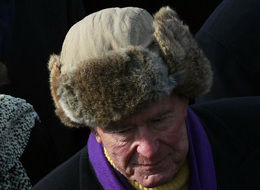
While there may or may not be an element of truth to this, it is off-topic and irrelevant.
About Israel
Read the Article at HuffingtonPost
12 March 2010
Post to Maskil_Activity 03/12/2010
- The Jewish community is not in need of an Israel advocacy campaign of facts and figures alone, but also of a new Jewish narrative based on Jewish ideas and values for engaging Israel in a way that will help integrate Israel into a modern Jewish identity. Jews today need to be able to address crucial questions for which they currently do not know the answer. For example: What is the role of "peoplehood" in modern Jewish identity? What is the meaning and purpose of Jewish sovereignty connected to territory rooted in the land of Israel to modern Jewish life? What are the requirements of morality of war, and how can Israel use its power in a way that is consistent with the highest standards of Jewish morality and values? How does Israel balance its legitimate right of self defense with the rights of others? Can a Jewish state be reconciled with the values of Jewish pluralism and freedom? Does the aspiration for a Jewish state automatically define Israel as a racist, apartheid state?
These are just some of the questions that need to be addressed and answered by this new Jewish narrative of Israel and Zionism. If one cannot answer them, there is neither a foundation for connecting to Israel nor the ability to sustain a viable and meaningful relationship. We need to educate and empower the Jewish community to engage Israel in a meaningful way before we can even think about asking them to advocate on its behalf.
50 Years Ago: The Reclamation of a Man-Made Desert (Scientific American)
Aurelio Peccei's Flawed Vision and The Club or Rome (The Nuclear Green Revolution)
"First, we must ask if Peccei over rates the human ability to foresee the consequences of its haphazard decisions and underrate the human ability to successfully adapt to those consequences as they emerge. We have to ask what Peccei envisions as the human and ecological consequence of modernity. First, premodern human economies were also capable of producing significant environmental feedback as a 2000 report by the state of Israel on the On the Implementation Of the United Nations Convention to Combat Desertification noted,
The arid regions of Israel suffered natural soil erosion due to climate change during early historical times, and ancient Negev populations invested commendable terracing efforts to halt this erosion and to develop run-off agriculture there. From the dawn of history nearly all parts of the country have been under intensive land use by humans, including pastoralism and cropping, though evidence for desertification or the lack of it during historical times is not conclusive. During the turn of the 19th century and the beginning of the 20th century exploitation of woody and herbaceous vegetation especially in the dry subhumid areas, for firewood and due to grazing, caused severe soil erosion and significant degradation of vegetation. Many lowland regions have become waterlogged and salinized. It is not known whether or not semi-arid drylands suffered desertification at that time.
The report does not elaborate on the relationship of grazing practices to desertification, but these are well documented elsewhere. "Wildlife", and Internet site states.
In the Near East, the plains between the Tigris and Euphrates rivers formed the ancient region of Mesopotamia. This area was known for its agricultural wealth, but it became an early victim of desertification brought about by humans.
Ancient farmers knew that periodically leaving land fallow or unplanted, helped to renew the soil’s fertility. But they stopped this practice so that they could grow more crops.
After 3000 B.C. irrigati- First, we must ask if Peccei over rates the human ability to foresee the consequences of its haphazard decisions and underrate the human ability to successfully adapt to those consequences as they emerge. We have to ask what Peccei envisions as the human and ecological consequence of modernity. First, premodern human economies were also capable of producing significant environmental feedback as a 2000 report by the state of Israel on the On the Implementation Of the United Nations Convention to Combat Desertification noted,
The arid regions of Israel suffered natural soil erosion due to climate change during early historical times, and ancient Negev populations invested commendable terracing efforts to halt this erosion and to develop run-off agriculture there. From the dawn of history nearly all parts of the country have been under intensive land use by humans, including pastoralism and cropping, though evidence for desertification or the lack of it during historical times is not conclusive. During the turn of the 19th century and the beginning of the 20th century exploitation of woody and herbaceous vegetation especially in the dry subhumid areas, for firewood and due to grazing, caused severe soil erosion and significant degradation of vegetation. Many lowland regions have become waterlogged and salinized. It is not known whether or not semi-arid drylands suffered desertification at that time.
The report does not elaborate on the relationship of grazing practices to desertification, but these are well documented elsewhere. "Wildlife", and Internet site states.In the Near East, the plains between the Tigris and Euphrates rivers formed the ancient region of Mesopotamia. This area was known for its agricultural wealth, but it became an early victim of desertification brought about by humans.
Ancient farmers knew that periodically leaving land fallow or unplanted, helped to renew the soil’s fertility. But they stopped this practice so that they could grow more crops.
After 3000 B.C. irrigation be-came more widespread, proba-bly in response to a population increase. As a result, the soil be-came exhausted. Its fertility was also decreased by a buildup of salts left behind by evaporated irrigation water. Eventually the once lush plains became a des-ert, and the ancient Mesopo-tamian civilization collapsed. At one time the lands north of Africa’s Sahara Desert supported a wide range of wildlife. Ancient rock paintings, murals in tombs, and Roman mosaics all depict deer and gazelle in grasslands, with predators such as leopards and lions hunting them.
Thus the ecological damage caused by modern agricultural practices must be measured against the ecological damage caused by traditional practices of agriculture. Neither is desirable, but the superior resources available to modern agriculturalists, would appear to make mitigation more likely. A recent Chinese report of the mitigation of agriculture related desertification states,
Under Roman rule, North Africa produced vast quantities of cereal grains such as barley and wheat. However, centuries of overgrazing by cattle, as well as harm to shrubs and trees by goats, have combined with climatic shifts to erode the land and destroy wildlife. Tunisia, for example, has lost approximately half its arable land.
Some scientists believe desertification reintorce itself intensifying the changes in the climate. Whenever vegetation is destroyed on a large, long-term scale, ground temperature rise and rainfall decreases. In 1969 the Israelis built a fence across the Sinai-Negev Desert between Israel and Egypt. On one side the Egyptians continued grazing camels, sheep, and goats. On the other side the Israelis left the land uncultivated, and wild plants began to take hold. Satellite photographs re-veal dark patches of vegetation under hazy cloud cover on the Israeli side but a clear sky and a desert in the making on the Egyptian side.Transforming the traditional resource-consuming agriculture into modern agriculture is the only choice and fundamental way to improve agricultural and ecological conditions in the Northwest.
Modern agriculture is a resource-saving and technology-intensive industry run by intensive management with the combination of planting, breeding, processing, trading, manufacturing and farming. The traditional way of extensive cultivation and management as well as the divorce of agriculture from animal husbandry must be replaced by the concept of modern agriculture. Only in this way, can the course of industrial management and adjustment of the agricultural structure be advanced, and a technology-industry system will come out of the combination of animal husbandry, cultivation of herbage, farming of fine breeds of livestock, water conservancy, processing of agricultural products, and management of agricultural energy.
Both irrigation- and rainfall-dependent agriculture can form an expanding agro-pastoral circle centered on villages or oases, which is the outcome of harmonized relations between human and nature, and an optimized man-made ecosystem suitable for natural and cultural environments in the Northwest.
If switching from grazing to rearing sheep in folds is to tackle the problems of desertification and degeneration of the grassland at the root on a large scale, speeding up the construction of modern agriculture is to resolve the issues of ecological improvement and agricultural development in the Northwest at a higher level. As fundamental measures to combat desertification, raising sheep in pens, stopping cultivating and grazing, and promoting the course of modern agriculture are emphases for the investment of capital and technology and deserve favorable policies.Thus not only may traditional agriculture cause far more ecological damage than modern agricultural practices, but modern agricultural practices offer routes to mitigation of the damages caused by traditional practices.
Nuclear Power Does NOT Help to Combat Climate Change (Coalition Against Nuclear Energy)
Posted from Diigo. The rest of my favorite links are here.
11 March 2010
Post to Maskil_Activity 03/11/2010
- THE BATTLE for the lands of the Galilee is two-fold, and Hashomer Hahadash is determined to fight it on both fronts. Alongside their guarding and educational activities, the guardsmen, along with half a dozen other organizations, are involved in the 2009 version of "land liberations." In response to the recent surge in purchase of private lands by Israeli Arabs, often financially backed by money arriving from foreign states, these groups have taken to offering to purchase the land from its Jewish owners themselves, in an attempt to keep it in Jewish hands, and for use in agriculture.
Kadima MK and former secretary-general of the Council of Jewish Communities in Judea, Samaria, and the Gaza Strip Otniel Schneller says that there currently exist two opposing trends that threaten to drastically change Jews' relationship with the land. "On the one hand, modern Israelis have increasingly come to view the land as real estate rather than national assets. You can see this in the recent privatization of the land that used to belong to the ILA, you can see it in the JNF's readiness to swap lands with the government."
"On the other hand," he continued, "we see a reverse trend among Israeli Arabs. They are beginning to see the land as a strategic asset, and they are doing everything they can to both stop lands in their possession from being sold to Jews, and to take over lands illegally where they can get away with it."
"The state has yet to realize, and I hope they will soon, that this is its most important battle. It is proper that the government start an organization with the sole purpose of safekeeping our national assets," says Schneller.
He accuses other politicians and the media of keeping the problem under wraps because it lacks ratings and is not politically correct. "It's not easy for a politician to say it, but for me it's clear. Israel is a Jewish state before it is a democratic state."
Improving The Performance Of Solar Thermal Power (The Oil Drum: Australia/New Zealand)
- * Avoid environmental conflicts and transmission line costs by building smaller plants on brownfield sites near cities.
We have a strategy at eSolar to never impact pristine land. And the way we address that is several-fold. First, we have a higher output per acre, so we take a smaller footprint. Second, we’re economical at a smaller size. We can be fully economical at our 46-megawatt size. Those two things combined let us use a small enough footprint that we can locate on private land closer to population centers.
So rather than needing 2,000 acres contiguous to make the economics work — which you almost only can find far away on pristine land or [federal] land — we can locate on only 200 acres very close to a city and we can buy previously disturbed farmland or other properties that’s already been developed so we’re not causing any disturbance to natural habitat. And that’s an important part of our philosophy. It gives us an economic advantage because we’re locating closer to transmission. That’s probably even a bigger factor.
It takes years and years to build the transmission out to the pristine lands. [But] the power plant, for example, in Lancaster [California], is across the street from a transmission line. We didn’t have to build miles and miles of transmission, which takes years and years to get people to approve.
Posted from Diigo. The rest of my favorite links are here.
10 March 2010
Post to Maskil_Activity 03/10/2010
Put an end to monopoly (Israel Opinion, Ynetnews)
- Before the modern period most of the ideas and practical approaches of what we know today as “streams of Judaism” co-existed side by side in the reality of the Jewish communities. Indeed, in the Mishna, the foundational text of Judaism as we know it, these streams are found side by side embedded in the variant opinions preserved as legitimate.
In modern times, these ideas, for many different reasons, developed into discrete movements. The reality is that Jewish religion today includes all of these movements. Thus, in order for a State to claim that it is Jewish it must not, ever, establish one of the streams over any other. To that extent, the State must distinguish between its right to impose by force laws on citizens, and remove itself from imposing laws which violate any religious conviction of a legitimate Jewish stream.
True, Judaism is a political religion, but the Mishna makes it clear that the founders of Judaism expected a politics which would protect, preserve and even encourage various interpretations of how to be Jewish. The Mishna includes mechanisms for rule in a situation of multiple opinions and practices. If Israel is to be able to claim that it is a “Jewish State” it must return to that original mentality and conception.In practice that would mean disestablishing the “religious establishment”, that is the Chief Rabbinate and its court system, and in its place create a “Religious authority” that would fairly and justly support and grant authority and State legitimacy to all streams of Judaism. Yes, there are issues on the boundaries, but there would be almost unanimous agreement on those boundaries. Indeed, the existence of established movements with members, institutions, history etc. would be a major factor in deciding who is included and who is not.
Comment / Can Israel have its OECD cake and eat it too? (Haaretz - Israel News)
- Is this model sustainable? Can Israel afford itself to pick and choose its participation for the long run and advance its interests in multilateral economic institutions only? I am afraid the answer is negative. The line between global politics and business is becoming very ambiguous. Multilateral economic forums are constantly being influenced by non-economic factors and political agenda. Our experience with the World Trade Organization showed us that the expansion of its membership and its growing agenda, including politically sensitive areas such as environmental and health policies, have politicized this economic institution. China, for example, has been using it to advance its anti-Taiwan foreign policy.
- Israel will have to choose its place in the world. Is it going to be an integral part of the future globalized world or continue to use cherry-picked international forums as long as we can control for the traditional bias? OECD membership may help Israel improve both its credit in international financial markets and the ability of Israeli companies to access liquidity, but it will make it very difficult for many Israeli diplomats and policy makers to explain why Europe should leave Israel alone in its fight for democracy and peace in the Middle East. The European interventionist sentiment is designed, among other places, in Paris, just couple of miles from the OECD headquarters.
OECD membership is a good thing for the Israeli economy. The OECD will officially accept one of the most advanced economies in the world to its table. It will boost Israel?s fight for its legitimacy in the world of ideas. Yet, when the inauguration ceremonies are over, OECD diplomats and technocrats may use Israel?s membership to promote their own political agenda in the region. Israel should be prepared for this moment. At that point, postponing the peace process for too long may not be an option.
Posted from Diigo. The rest of my favorite links are here.
Subscribe to:
Posts (Atom)